A Pocket Record of a Country Day
A pocket record of a country day helps you keep the small details of an outing with a pencil, a scrap of paper and a few attentive minutes.
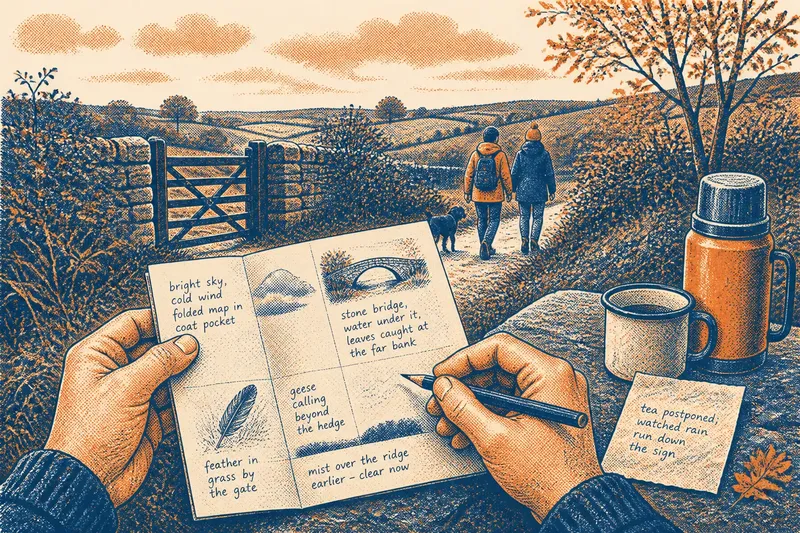
A pocket record of a country day can hold the detail that slips away first: the smell of damp leaves by a gate, a name on a hand-painted sign, or the shape of clouds over a field. You do not need a notebook made for the purpose. A scrap of paper, a pencil and a few minutes are enough to make a personal keepsake that feels like the day itself.
Keep the practice light. Choose one or two prompts below, rather than trying to document the whole outing. Write while you pause, or jot a cue and add a few words later at home.
1. What did you notice before you set off?
Begin with the small preparations that belong to this particular outing. Note what you carried, what you left behind, or the weather you met at the door. These details can place you in the day without turning the record into a timetable.
Try a short line such as “folded map in coat pocket; bright sky, cold wind”. A bus ticket, folded leaflet or the back of a paper bag can serve as a surface. If you would rather keep the words clean, make a note in your phone and copy it later onto paper.
Choose details that are yours, not a full inventory. The weight of a flask, a muddy hem or the sound of a latch closing may bring the start of the day back more clearly than a list of everything you packed.
2. Which small detail deserves a closer look?
Pick one thing that might otherwise pass unnoticed. It could be a pattern in a stone wall, a feather caught in grass, the lettering on a farm gate or the arrangement of cups in a tearoom window. Describe what you can see rather than searching for a grand meaning.
Use a few precise words: “three pale stones beside the black gate” gives you more to recognise later than “nice view”. You can add a sound, texture or smell if it is easy to recall. Keep the detail grounded in the place and your own attention.
Leave natural objects where they are. A note or sketch can preserve the encounter without taking a flower, shell, feather or other find from its setting. If a detail is on private land or belongs to someone else, record it from a place where you are welcome to stand.
3. How can a quick sketch carry the memory?
A sketch does not need to be accurate. Draw the outline of a crooked tree, the shape of a footbridge or the spacing of cottages along a lane. A few marks can remind you how things sat in relation to one another, which a single adjective may not capture.
Use whatever is already to hand: a biro, the margin of a leaflet, a small notebook or a phone’s drawing tool. Start with the largest shape, then add one recognisable feature. If you have only a moment, draw a simple line and label it with a word such as “arched”, “low” or “wind-bent”.
Say you stop beside a stone bridge and have no notebook. Imagine drawing its arch on the blank edge of a folded map, then adding “water under it, leaves caught at the far bank”. The expected result is a modest visual cue and a few words that help you recall the scene, not a finished picture.
4. What can a sound or phrase preserve?
Some of the most distinctive parts of a country day are heard rather than seen. Write down a sound you noticed: geese calling beyond a hedge, gravel shifting beneath boots, or the bell at a village shop door. If you cannot remember its exact quality, record where it came from and what you were doing.
A phrase overheard in ordinary conversation can also anchor a memory, but avoid recording private details or identifying people without their permission. You might note “the neighbour called the lane the old way” rather than copying a personal exchange. Your own words are often enough to bring back the mood.
For a useful prompt, finish one of these lines: “The quietest sound was…”, “I heard… before I saw…”, or “The place sounded different when…”. Answer with a phrase, not a polished paragraph. A rough note is easier to make in the moment and can be enough later.
5. How do you capture a change in the weather?
Weather gives an outing a shape, so record what it did rather than relying on a general label. Note a sunlit patch moving across a field, rain darkening a wooden bench, or a gust lifting the edge of a map. These observations are particular to the place and the time you were there.
If conditions change, make two brief notes: one near the start and one later. You might write “mist over the ridge” and, after a pause, “ridge clear; clouds gathered behind us”. The contrast can help you remember the day’s rhythm without requiring a detailed account.
There is no need to write in poor conditions. Keep paper dry and put your attention on moving safely and comfortably. If the moment is awkward for writing, remember a single image and make the note once you are sheltered or back indoors.
6. What small record can you make of a shared outing?
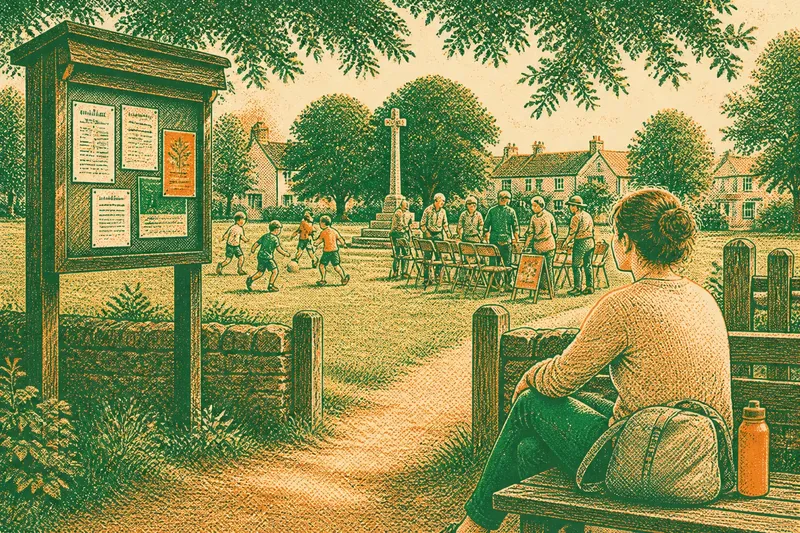
When you are with someone, note a shared choice or moment without making the record a report about them. Perhaps you took the longer path to see a view, shared the last biscuit, or stopped to read a noticeboard. A few words can preserve the shape of the company as well as the scenery.
Try a neutral prompt: “We stopped when…”, “We chose… because…”, or “The best pause was…”. If another person says something you want to include, ask before writing down their words, especially if the note might later be shared. A private keepsake can stay private.
Imagine two friends sheltering beneath a shop awning during a brief shower. One writes “tea postponed; watched rain run down the sign” on a receipt. The expected result is a record of an unexpected pause, rather than a list of sights that could belong to any visit.
7. How can you keep the record without collecting things?
A keepsake need not be an object brought home. Write the name of a place, copy a public sign’s wording, or note the colour and shape of something you saw. If you use a leaflet or ticket, keep it only if it is yours to take and useful to you; a description can do the same job without adding clutter.
For a simple pocket method, carry one small sheet folded into quarters and a pencil that will write on ordinary paper. Use one panel for a short phrase, another for a rough sketch, and leave the remaining space blank. The blank space is a reminder that a record can be partial.
At home, you can tuck the note into a book, place it in a drawer with other outing scraps, or photograph it if you want a digital copy. Add the place name only if you remember it clearly. Do not fill gaps with guesses; an honest fragment is more useful than a confident detail you cannot verify.
Which pocket-record questions come up most often?
What should I write if nothing stands out?
Record an ordinary detail: the ground underfoot, the colour of a gate, or what you noticed while waiting. A small observation is still specific to your day.
Can I use my phone instead of paper?
Yes. Type a short note or make a quick sketch in a notes app, then leave it as a simple record rather than trying to create a polished album. Keep your attention on the outing when using the phone would distract you.
How do I remember a place name accurately?
Copy it from a public sign or leaflet if convenient, or make a note to check it later. If you are unsure, leave the name out rather than filling the gap from memory.
What if I only remember the outing after I get home?
Write down the first detail that returns, then add one or two connected observations. You can mark it as a memory made later, which keeps the record clear without requiring a perfect account.
8. When should you stop writing?
Stop when you have one detail that feels recognisable. A pocket record is not a duty to describe every view, turn or conversation. Leaving some of the day unwritten lets you stay present and gives the note room to remain personal.
Before putting the paper away, add a place or season if you know it, and a short cue about what you were doing. That small anchor can make a pocket record of a country day easier to revisit later, while keeping the keepsake modest enough to make again on your next outing.